
Team setup
1x Design Lead (me)
1 x Supporting Product Manager
6 Engineers (iOS, Android & Backend) + Engineering Manager
1 x Data scientist
Connecting with Internal brand team and an external advertising agency
Uncovering the problem
Flexible tickets let users travel on different trains, but our app had no way to update their booked journey when plans changed. Instead, users were running new searches for trains on the same route, suggesting they were looking for alternative services on-the-day of travel, despite already having a valid ticket.
With 60% of UK travellers buying flexible tickets, this revealed a clear opportunity. Users were already trying to find this information themselves. We could remove that extra effort by making alternative trains easier to explore and allowing users to update their journey for accurate live information and disruption support.

Hypothesis and user needs
By giving users with flexible tickets the ability to update their journey, we could make sure they had the right information for the train they actually intended to catch. More importantly, it meant we could be there when things went wrong, helping them navigate disruption with confidence. It also gave the team a much clearer mission and focus.


Long term goal
My long-term vision was to bring existing ticket changes and the new journey update functionality together under one roof: Train Swap.
A single place where users could change their journey, whether switching trains with a flexible ticket or paying to travel at a different time. It also created a commercial opportunity to surface relevant paid options, driving additional sales while making the experience more useful.

Phasing the project
I took the lead in breaking the project down into clear milestones, helping us deliver value sooner, learn as we went and build momentum. This also gave us a way to work through technical constraints without losing sight of the bigger picture, making sure each step laid the foundations for something scalable and moved us closer to the long-term vision.


User testing
We already had high confidence in the core flow, as changing a ticket was a familiar experience. Instead, we focused testing on specific assumptions and ironing out the details.
One key insight was that users didn't always understand why they should update their journey when travelling on a flexible ticket. After all, they didn't need a new ticket, so why bother? We needed to make the value clearer, having the right live journey information, disruption support and help when things don't go to plan.


Design execution
A key design principle was keeping things as simple as possible. I wanted users to be able to update their journey in just two steps, with as little friction as possible.
However, updating all the journey information behind the scenes took a little time. To make that wait feel less frustrating, I suggested introducing a short splash screen animation, giving users a visual cue that things were happening and making the experience feel more considered rather than just waiting for a loading screen to finish.


Wider campaign
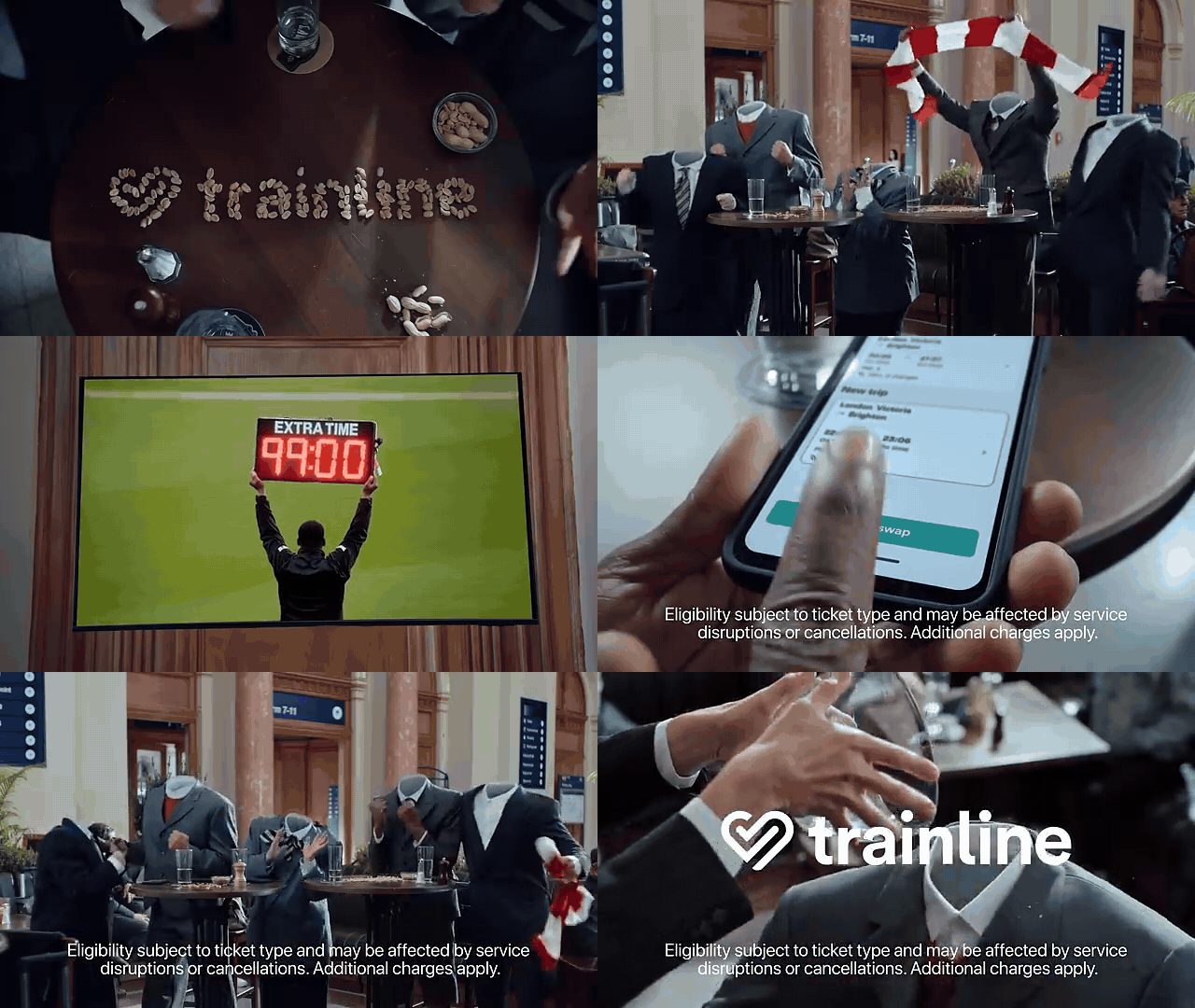
Alongside three other feature launches, we were putting our Travel and Disruption experiences centre stage in a major UK campaign.
I played a key role bridging Product and Brand, designing the product UI across advertising, branded landing pages and in-app marketing. Working closely with Weiden+Kennedy, I helped shape the creative direction and bring our product experiences into the wider campaign.


Impact
We defined a range of success metrics, with these three having the biggest impact on the business. We also introduced a holdout group to measure longer-term retention, specifically for Train Swap, where early results showed positive signals that users were more likely to keep coming back to Trainline.
150,000
swaps in a 9 month period.
Out of est. 1.9m eligible flexible tickets (around 8%).
+5 pts
percentage points, more users returned within 3 months than comparable users who didn’t swap (indicative).
52,000
fewers calls and chats a year, saving on average 14 minutes of support per agent
Award winning
The Travel Companion, the home of Train Swap, won two Gold awards at the London Design Awards. A brilliant moment for the team, and a personal achievement I'm incredibly proud of.

Reflections
This project pushed me well beyond the traditional hands-on designer role. I took a more active role in shaping the strategic direction, defining the approach and helping phase the work to bring the product vision to life.
I also became the bridge between Product and Brand, working closely with some brilliant external people to align the product experience with the creative campaign. I helped translate the UI & Product vision across both worlds, making sure the experience, artwork and campaign all felt connected.
It gave me a much broader understanding of what it takes to take a product from an idea to a fully realised launch at a large scale company.